
Our Breast Imaging StaffShow
- Warren P. Shepherd Jr., M.D.
- Folashade Ajegba, MD
- Priyanka Deb, MD
- Bradley Staehle, MD
- Yu Grace Zeng, MD
- Andrey Sinelnikov, MD
- Devrim Ersahin, MD
- Erik Rhodes, MD
- Howard Natenshon, MD
- Martha Lopez, MD
- Steve Allen, MD
- Lawrence H. Goodman, MD
- Michael Habeeb, MD
- Jennifer Hadro, MD
- Rhett D. Krause, MD
- Alena Kreychman, MD
- Vivian I. Miller, MD,FACR
- Mae Mae Mirabelli, MD
- Christopher C. Moore, MD, PhD, FACR
- Carlos M. Valdes, MD
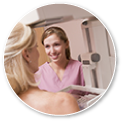 Breast imaging is much more than screening for breast cancer. Radiologists who subspecialize in breast imaging and diagnostic procedures use imaging to assist in diagnosing and treating diseases and conditions of the breast. This subspecialty includes mammograms, breast ultrasound, aspirations and biopsies with imaging guidance, magnetic resonance imaging (MRI), ductography, and molecular imaging. Breast diseases uncommonly occur in males, and over 95% of the patients cared for by these physicians are female.
Many of the major threats to women’s health are treatable and curable if detected early. Imaging can play an important role in early detection and diagnosis. At Radiology & Imaging, the training and experience of the radiologists and the use of advanced, high-resolution imaging equipment provide many women with the opportunity for early detection and a better long-term outcome.
Working Together With Other Physicians
To coordinate and deliver high-quality care, we communicate clearly with our patients and with the personal physicians and physician specialists who are involved in their care. Our breast imaging radiologists frequently work with:
- Primary Care Physicians
- Obstetrician/gynecologists
- Breast surgeons
- Medical Oncologists
- Radiation Oncologists
Common Health Issues and Body Systems
Women have many breast-related health conditions beyond cancer that include breast pain, fibrocystic changes, benign masses, nipple discharge, breast-feeding, and changes related to hormone replacement therapy (HRT).
Collaborating With the Patient and Referring Physician
At Radiology & Imaging, our radiologists are directly and actively involved in patient care. Our radiologists and technologists review and discuss suspicious imaging findings with patients, discuss different biopsy options, and are available to address patients’ questions and concerns. After biopsy, radiologists review the pathology results and compare them with the imaging findings. Recommendations for management based on the biopsy results and imaging are conveyed to the patient’s personal health care provider and to any specialists involved in the patient’s care.
Breast Imaging at Radiology & Imaging
The R&I Breast Imaging team is the most subspecialized group of breast imaging radiologists in the region. Our radiologists interpret over twice the minimum number of mammograms required by the FDA—some interpret well over ten times that number.
Members of this group have expertise in breast ultrasound, MRI, and biopsy techniques. Representative radiologists from this section give local and national educational presentations on breast imaging and are responsible for resident instruction. They attend national conferences yearly to keep up-to-date on the latest developments and participate on national committees for exam development in Breast Imaging for the American Board of Radiology. They are also active in research and have authored peer-reviewed journal and textbook publications in Breast Imaging. As a result, we are able to attract very high-quality breast imaging radiologists to our practice.